

High Cholesterol & Preventive Cardiology
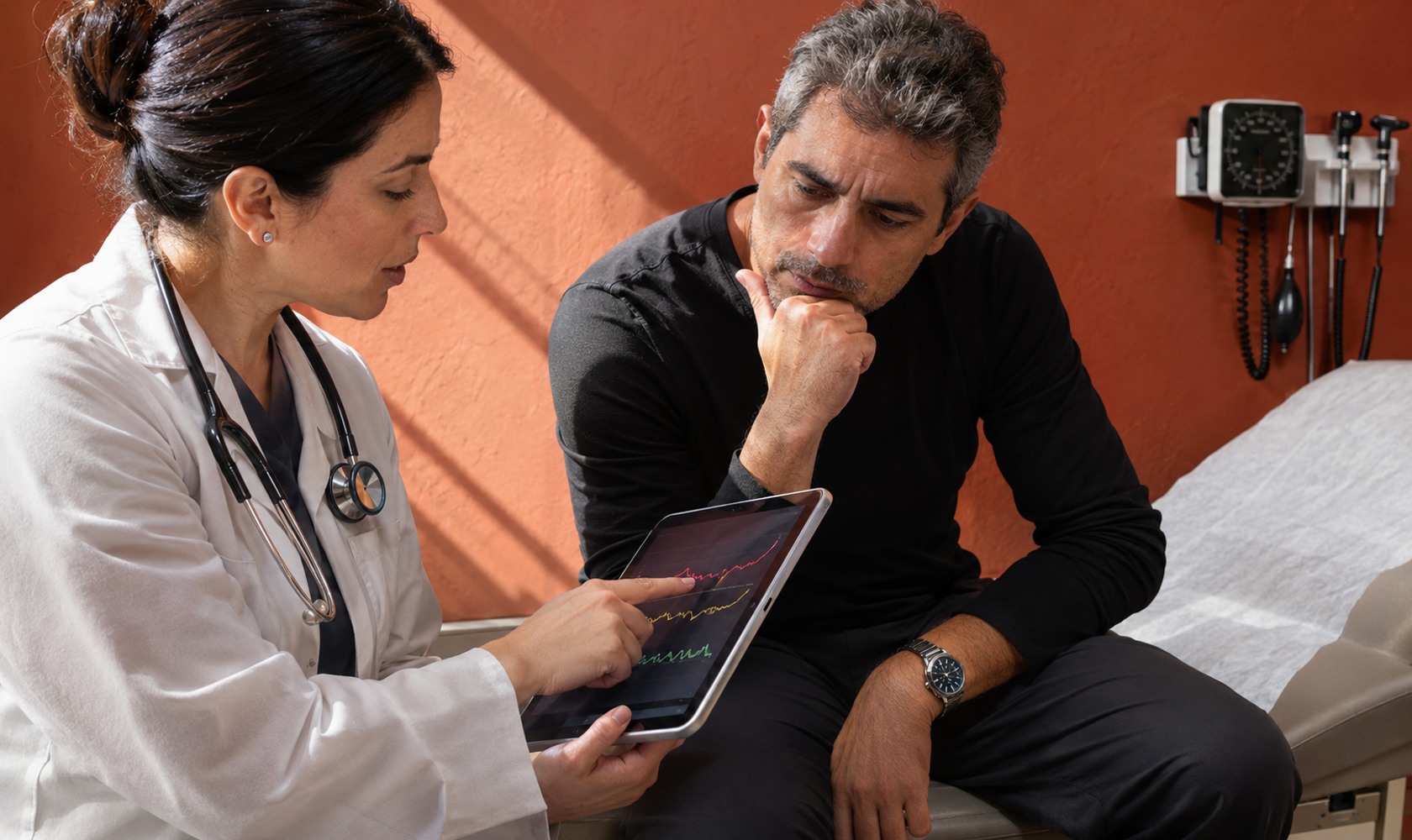 Preventive cardiology estimates the chance of future cardiovascular disease and addresses the factors that influence it. Cholesterol is one part of that assessment, alongside blood pressure, diabetes, smoking and family history. Inherited high LDL can increase risk even in a young person who exercises and feels well.
Who may benefit
- Adults with persistently high cholesterol or triglycerides.
- People with relatives who had premature heart attacks or strokes.
- Patients with diabetes, kidney disease or multiple cardiovascular risks.
- Anyone needing prevention review after a heart attack, stroke or vascular diagnosis.
Turning risk information into treatment
We review a lipid panel, previous events, family history and daily habits. Selected additional tests can clarify inherited risk or uncertainty. A coronary calcium scan may help some treatment decisions, but it does not replace emergency assessment of chest symptoms or suit every patient.
The plan can include smoking cessation support, a sustainable eating pattern, physical activity and treatment of blood pressure or diabetes. Statins and other lipid-lowering medicines can reduce future events when the risk warrants them. We explain expected benefit, possible adverse effects and follow-up testing.
Prevention after an established event differs from primary prevention in someone who has never had one. Aspirin does not automatically benefit everyone because bleeding risk also matters. Bring previous results and a family history with approximate ages at diagnosis so the assessment can move beyond a cholesterol number alone.
Telehealth
Your healthcare should be on your schedule. With Bayspring Medical telehealth services, you can connect with your provider from the comfort of home, making it easier than ever to manage your health. From virtual consultations to follow-up visits, our telehealth options provide flexible, convenient access to quality care without the need to travel.
Urgent symptoms
New chest pressure, sudden weakness or speech difficulty requires emergency care. A prevention appointment should never delay assessment of possible heart attack or stroke symptoms.

