

Pulmonology & Allergy
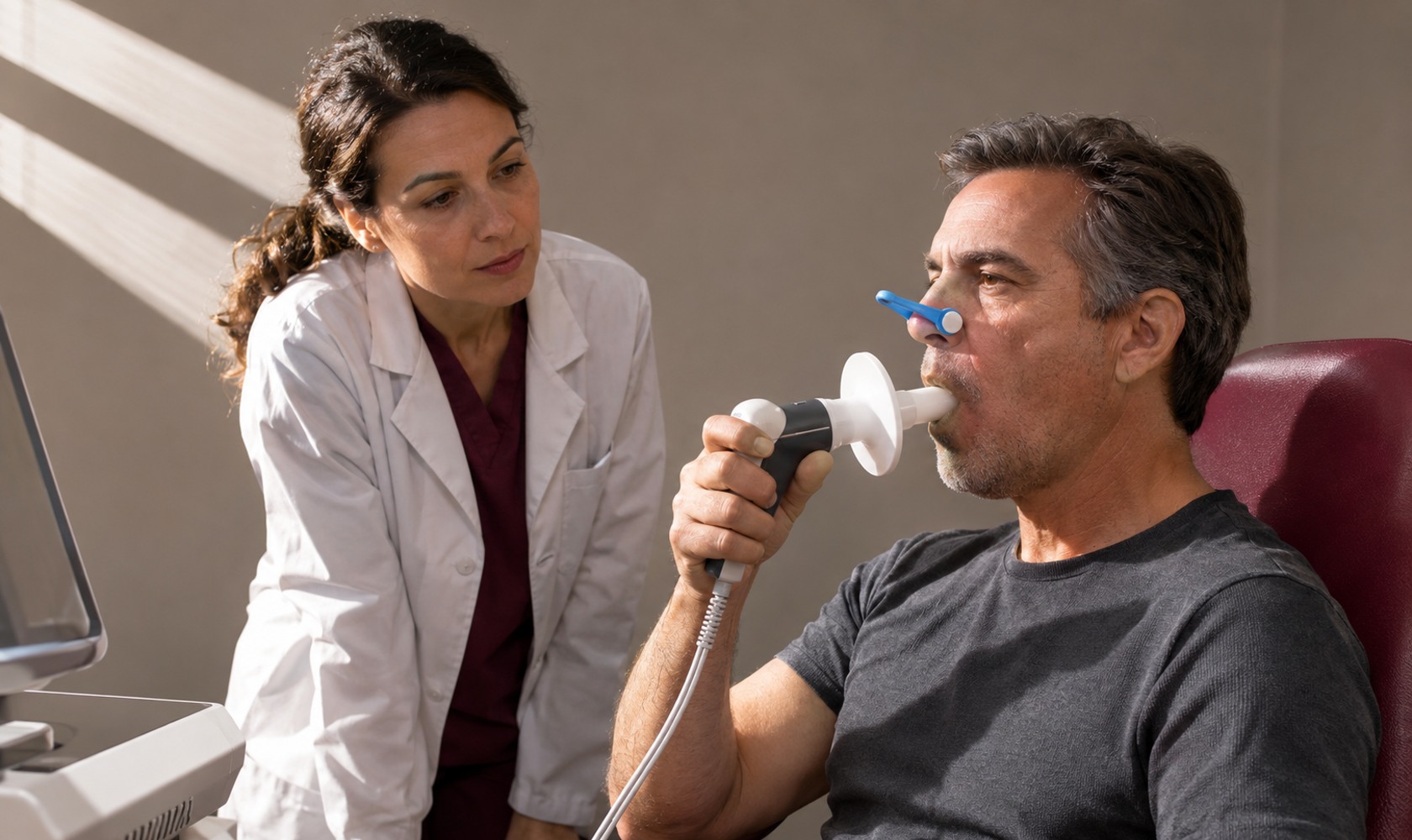 Pulmonology assesses breathing problems and lung disease, while allergy care investigates immune reactions to relevant exposures. Asthma can overlap with allergic rhinitis, but breathlessness does not always come from allergy or the lungs. Infection, heart disease, anemia and other conditions may require a different investigation, which makes the symptom pattern and examination essential.
We evaluate persistent cough, wheezing, reduced exercise tolerance and confirmed respiratory conditions. Allergy consultations focus on a clear reaction history rather than testing everything at once. A result showing sensitization does not necessarily prove that a food or environmental exposure causes your symptoms.
Reasons to arrange a consultation
- Cough that persists, recurs or changes from your usual pattern.
- Wheezing, chest tightness or breathlessness during activity.
- Asthma or COPD symptoms despite prescribed treatment.
- Repeated respiratory infections or incomplete recovery after pneumonia.
- Seasonal nasal or eye symptoms, or a suspected food-related reaction.
- Recurring hives or questions about allergy testing and immunotherapy.
Testing the suspected mechanism
We review timing, smoking or vaping, occupational exposures, medicines and previous treatment. Examination includes breathing, oxygen levels and relevant cardiovascular findings when indicated. Spirometry measures airflow and can help distinguish asthma or COPD; further lung-function testing or chest imaging follows the clinical question.
For allergy concerns, selected skin-prick or specific-IgE blood tests can support the history. Supervised challenge testing sometimes helps clarify a diagnosis and belongs in a suitable specialist setting. Broad food IgG panels do not diagnose allergy. We explain preparation and whether any medicines need adjustment before a test.
Telehealth
Your healthcare should be on your schedule. With Bayspring Medical telehealth services, you can connect with your provider from the comfort of home, making it easier than ever to manage your health. From virtual consultations to follow-up visits, our telehealth options provide flexible, convenient access to quality care without the need to travel.
Treatment and day-to-day control
Care may involve inhalers, a written action plan, smoking cessation support, rehabilitation or treatment of a confirmed infection. We check inhaler technique before assuming a medicine has failed. Allergy treatment can include practical exposure measures, symptom medicines and selected immunotherapy.
Follow-up reviews activity, sleep, flare frequency and treatment safety. Severe breathlessness, blue lips, confusion or significant chest pain needs emergency care. Throat swelling or collapse after an exposure can indicate anaphylaxis and requires immediate epinephrine if prescribed and an emergency response.

