

Deep Vein Thrombosis (DVT) & Peripheral Artery Disease (PAD)
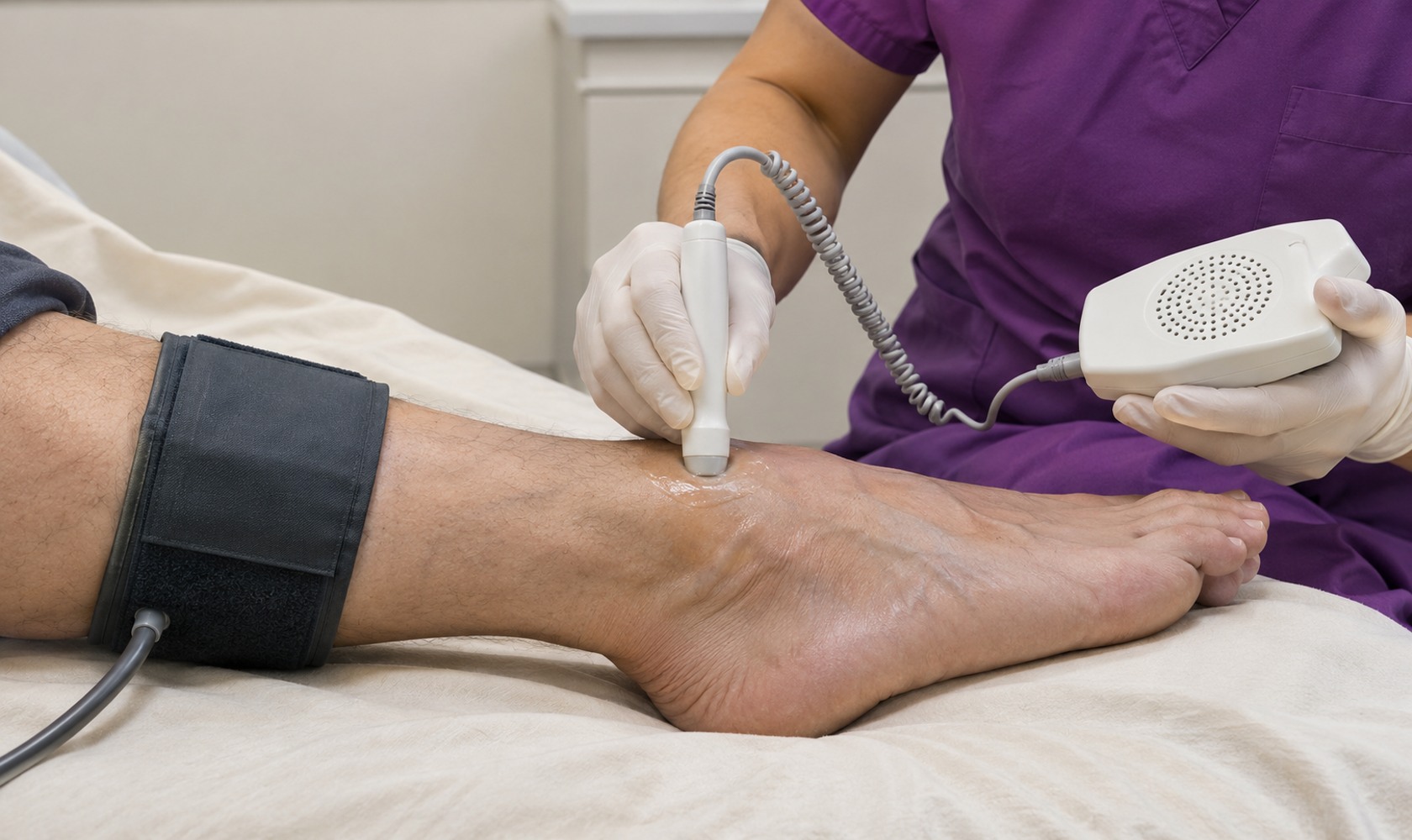 Deep vein thrombosis is a clot in a deep vein; peripheral artery disease narrows arteries and reduces blood supply, usually to the legs. These conditions affect different vessels and require different treatment. Immobility, surgery and some illnesses increase clot risk, while smoking, diabetes and atherosclerosis contribute to arterial disease.
Symptoms that need assessment
- New one-sided leg swelling, warmth or pain: seek same-day evaluation.
- Calf discomfort during walking that eases with rest.
- Foot wounds that heal slowly or changes in foot temperature.
- A previous clot or arterial diagnosis needing follow-up.
Separate tests and treatment pathways
For suspected DVT, the clinician assesses clinical probability and arranges an urgent ultrasound or appropriate testing pathway. A D-dimer test helps only in selected circumstances. Confirmed clots commonly need anticoagulation with attention to bleeding risk, provoking factors and treatment duration.
For suspected peripheral artery disease, pulse examination and an ankle-brachial pressure test can assess circulation; ultrasound or further imaging may guide intervention. Treatment addresses smoking, cholesterol, blood pressure and diabetes, alongside structured walking therapy and selected medicines. Rest pain or threatened tissue may require revascularization.
Do not start compression or massage a newly swollen painful leg without evaluation. Bring imaging and previous anticoagulation records. Follow-up differs between clot prevention and arterial protection, even when both conditions occur in the same person.
Telehealth
Your healthcare should be on your schedule. With Bayspring Medical telehealth services, you can connect with your provider from the comfort of home, making it easier than ever to manage your health. From virtual consultations to follow-up visits, our telehealth options provide flexible, convenient access to quality care without the need to travel.
Emergency warning signs
Sudden breathlessness, chest pain or coughing blood may indicate pulmonary embolism: call 911. A suddenly cold, pale, numb or severely painful limb also needs immediate emergency assessment.

