

Varicose Veins & Spider Veins
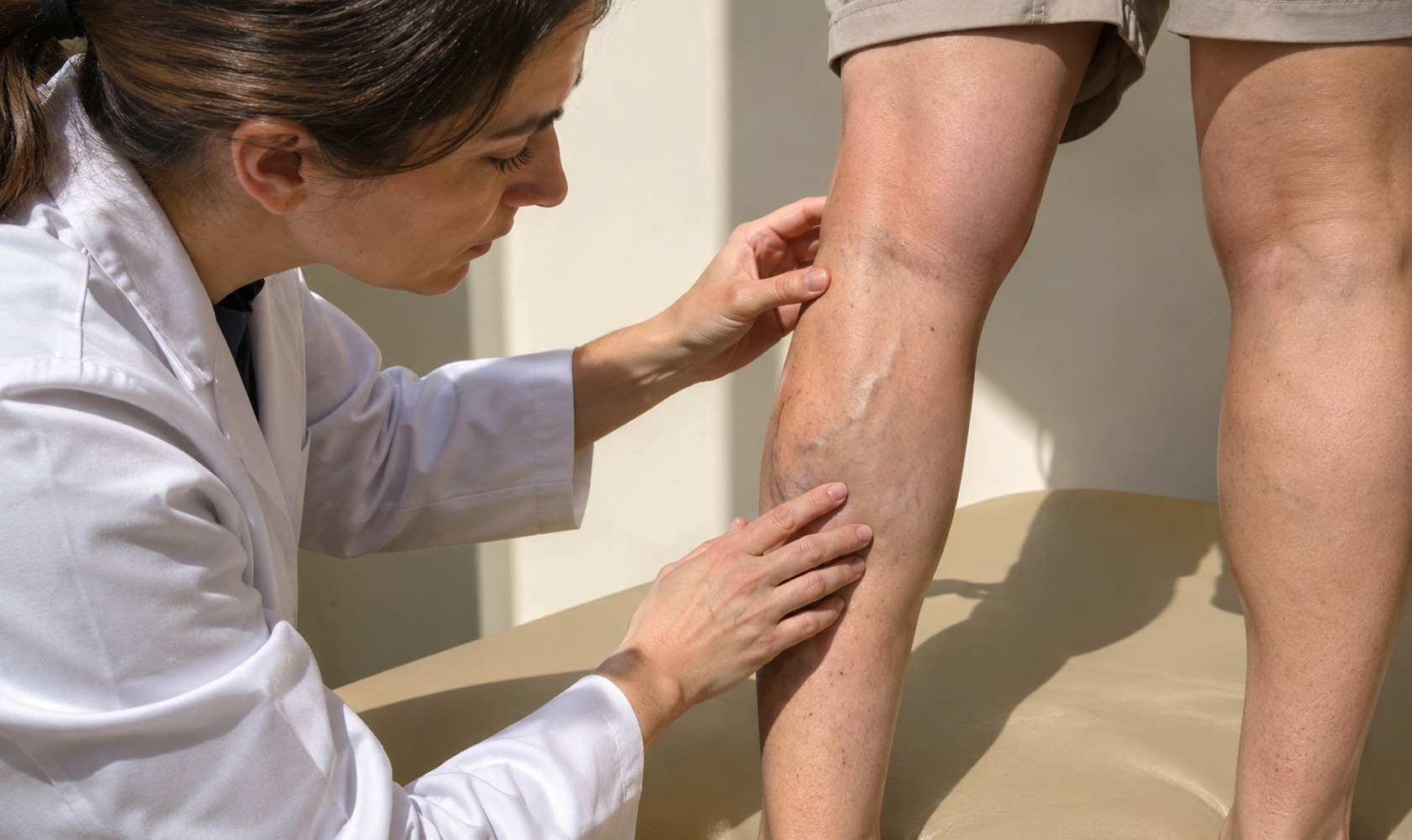 Varicose veins develop when leg-vein valves allow blood to pool, enlarging superficial veins. Spider veins are smaller visible vessels and may cause no medical symptoms. Pregnancy, family history, prolonged standing and previous clots can contribute; swelling or pain needs assessment before a cosmetic treatment decision.
Reasons for a vein consultation
- Aching, heaviness or swelling that worsens after standing.
- Bulging veins with itching or discomfort.
- Skin discoloration, eczema-like changes or a slow-healing lower-leg wound.
- Recurrent bleeding or concern about a painful area along a vein.
Checking blood flow and choosing treatment
We examine the legs, skin and pulses and review clot history. Duplex ultrasound can map abnormal flow and distinguish superficial valve failure from other causes. Arterial circulation needs consideration before recommending strong compression, particularly with diabetes, foot pain or reduced pulses.
Treatment may include regular movement, leg elevation and appropriately fitted compression. Persistent symptomatic varicose veins may suit endovenous ablation, injections or another vascular procedure. Small spider veins sometimes respond to sclerotherapy, but cosmetic treatment does not address every cause of leg discomfort.
We explain risks, recurrence and recovery before a procedure. A leg ulcer may need coordinated wound care as well as treatment of venous pressure. Follow-up checks symptoms and healing rather than judging success only by the appearance of the veins.
Telehealth
Your healthcare should be on your schedule. With Bayspring Medical telehealth services, you can connect with your provider from the comfort of home, making it easier than ever to manage your health. From virtual consultations to follow-up visits, our telehealth options provide flexible, convenient access to quality care without the need to travel.
When symptoms need urgent attention
Sudden one-sided swelling, warmth or pain needs prompt assessment for a clot. Uncontrolled bleeding from a vein or swelling with chest pain or breathlessness requires emergency care.

