

Fungal Infections (Nail Fungus, Ringworm)
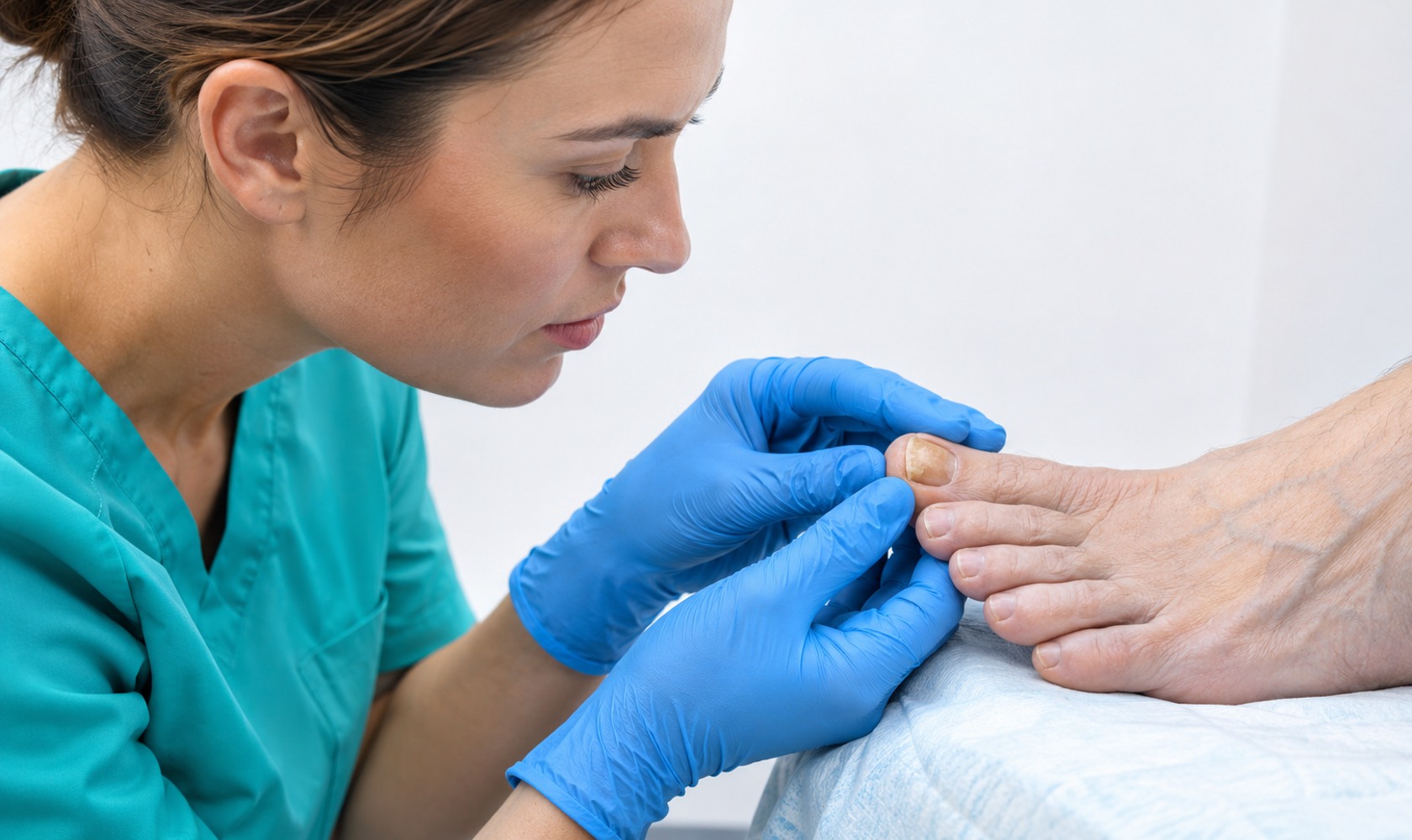 Fungi can infect the outer skin layers or nails, causing ringworm, athlete's foot or nail infection. Warmth, moisture, shared surfaces and repeated skin damage can support growth. Thick or discolored nails also have nonfungal causes, including trauma and psoriasis, which makes confirmation useful before prolonged treatment.
Symptoms that merit assessment
- An itchy, scaly ring or spreading patch of skin.
- Peeling or cracking between the toes.
- Thickened, crumbly or discolored nails.
- Recurrent symptoms, especially with diabetes or reduced immunity.
Confirming infection and selecting treatment
We examine the skin and nails and review previous creams, footwear and relevant exposures. A scraping or nail clipping can support microscopy, culture or another fungal test. Testing helps avoid months of oral treatment for a nail change that fungus did not cause.
Localized skin infection often responds to an antifungal cream and moisture control. Scalp infection, widespread disease or selected nail infections may need an oral medicine. We review interactions, pregnancy considerations and any appropriate liver monitoring before systemic treatment.
Nails recover slowly because healthy nail must grow out; early clearing at the base does not mean immediate restoration of the whole nail. We explain duration, prevention and when another diagnosis needs consideration. Avoid using steroid cream alone on a suspected fungal rash because it can mask or worsen infection.
Telehealth
Your healthcare should be on your schedule. With Bayspring Medical telehealth services, you can connect with your provider from the comfort of home, making it easier than ever to manage your health. From virtual consultations to follow-up visits, our telehealth options provide flexible, convenient access to quality care without the need to travel.
Signs needing earlier medical care
Increasing warmth, redness, swelling, drainage or fever may indicate bacterial infection. A new foot wound or spreading infection in someone with diabetes needs prompt assessment.

