

Snoring & Sleep Apnea Evaluation
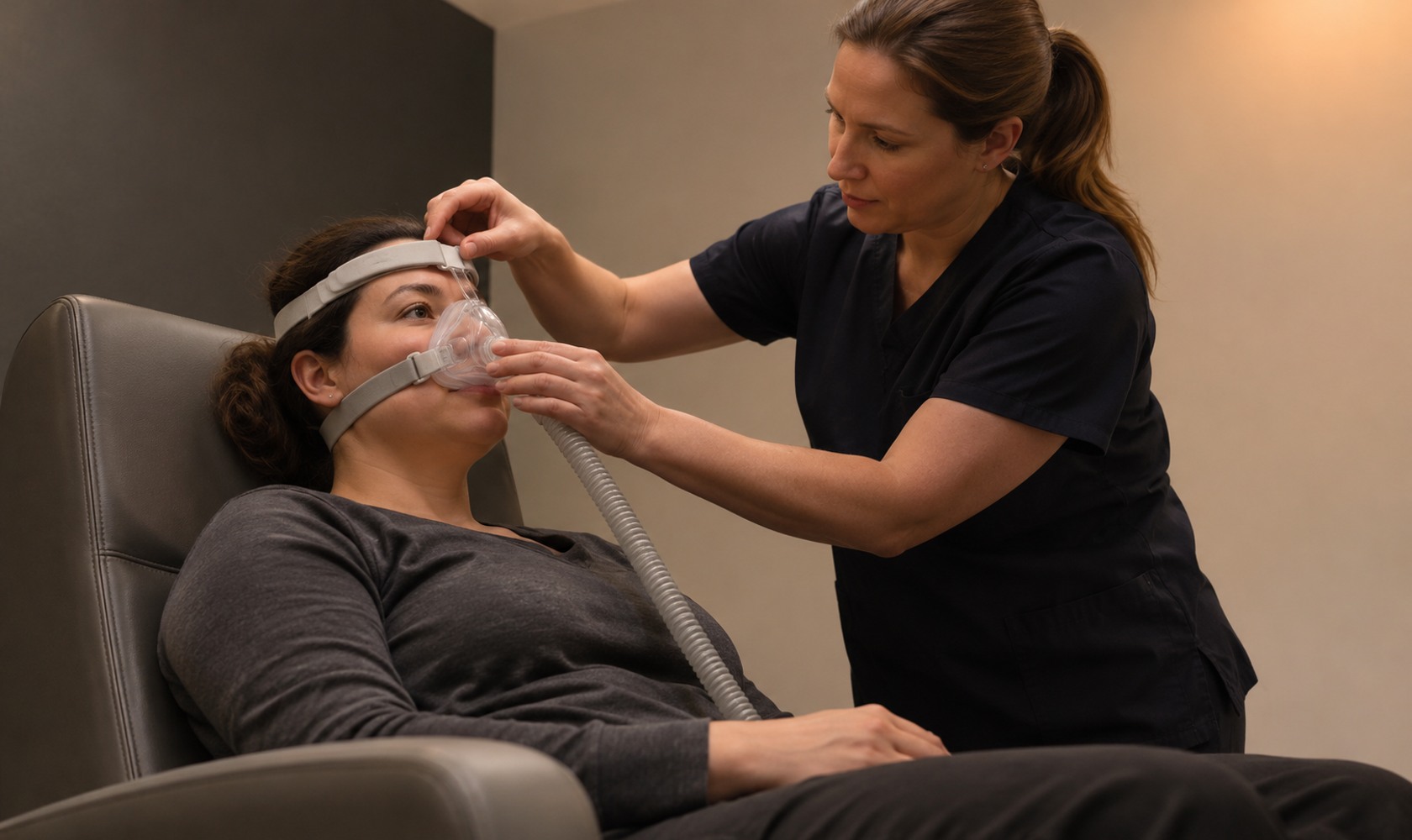 Snoring occurs when upper-airway tissues vibrate during sleep. Obstructive sleep apnea involves repeated narrowing or closure that interrupts breathing and can reduce oxygen levels. Not everyone who snores has apnea, but untreated apnea can affect alertness, blood pressure and cardiovascular health.
When to arrange an evaluation
- Loud habitual snoring or witnessed breathing pauses.
- Gasping during sleep or waking with a dry mouth.
- Daytime sleepiness, morning headaches or impaired concentration.
- Difficult-to-control hypertension or poor tolerance of existing apnea treatment.
Confirming the diagnosis
We review sleep pattern, medicines, alcohol, weight history and airway symptoms. Examination considers nasal blockage, tonsils and other relevant anatomy. A home sleep apnea test or laboratory sleep study can establish the pattern in suitable patients; the choice depends on medical history and the question being investigated.
Treatment may include positive-airway-pressure therapy, a fitted oral appliance, positional changes or weight-management support when relevant. Treating nasal obstruction can improve comfort but does not necessarily cure apnea. Selected anatomical problems may justify surgery after a fuller assessment.
We review the actual sleep-study findings and treatment use rather than assume quieter snoring means the breathing problem has resolved. Follow-up addresses mask fit, dryness or other barriers to therapy. Bring earlier study reports and device information if you already use treatment.
Telehealth
Your healthcare should be on your schedule. With Bayspring Medical telehealth services, you can connect with your provider from the comfort of home, making it easier than ever to manage your health. From virtual consultations to follow-up visits, our telehealth options provide flexible, convenient access to quality care without the need to travel.
Immediate safety concerns
Avoid driving or operating machinery when excessive sleepiness makes you unsafe and seek prompt assessment. Severe waking breathlessness, chest pain or altered awareness requires urgent medical care rather than a routine snoring consultation.

