

Hernia Repair (Inguinal, Umbilical)
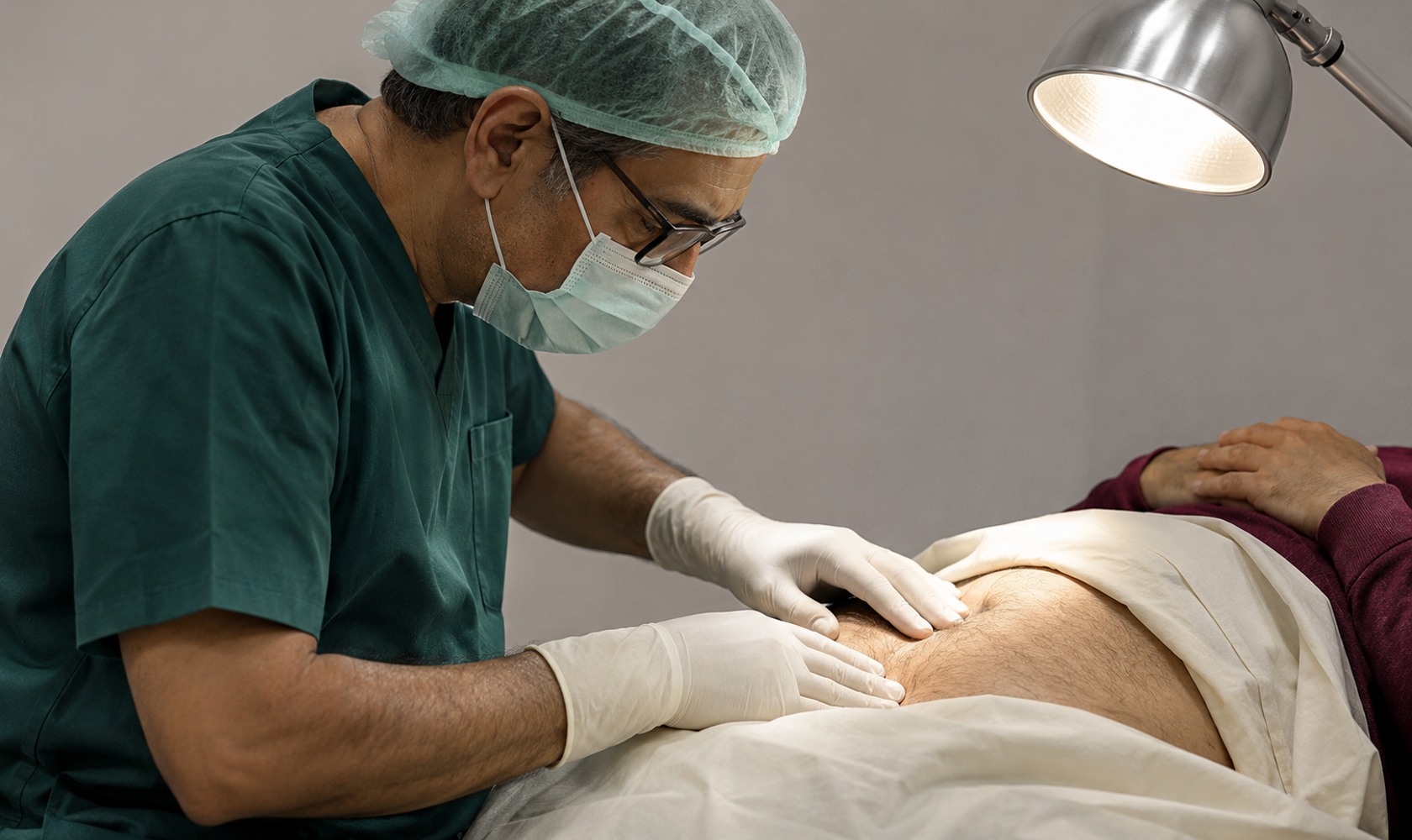 A hernia occurs when tissue pushes through a weakness in the abdominal wall, creating a bulge. Inguinal hernias affect the groin; umbilical hernias occur near the navel. Some remain stable, while others cause pain or trap tissue, and the location and symptoms influence the treatment decision.
Reasons for surgical assessment
- A groin or navel bulge that enlarges with coughing or straining.
- Discomfort when lifting, standing or exercising.
- A known hernia that increasingly limits activity.
- Questions about repair, observation or recovery needs.
Examination and repair options
We examine the area, often while standing or coughing, and review previous surgery and relevant health conditions. Ultrasound or other imaging may help when the examination does not establish the diagnosis. Not every abdominal lump is a hernia.
Selected patients can discuss observation, while symptomatic or higher-risk hernias may need repair. Open and minimally invasive approaches have different practical considerations, and mesh may form part of the repair. The surgeon explains risks including recurrence, infection and persistent pain, along with why one approach fits your situation.
Preparation includes medicine review and steps that can support healing, such as smoking cessation and diabetes control. Recovery advice covers walking, lifting and return to work based on the procedure. A support garment cannot repair the underlying defect and should not replace assessment of worsening symptoms.
Telehealth
Your healthcare should be on your schedule. With Bayspring Medical telehealth services, you can connect with your provider from the comfort of home, making it easier than ever to manage your health. From virtual consultations to follow-up visits, our telehealth options provide flexible, convenient access to quality care without the need to travel.
A trapped hernia can be an emergency
A bulge that becomes suddenly painful, firm or impossible to reduce, especially with vomiting or abdominal swelling, needs emergency assessment. Do not repeatedly force a painful bulge back in while delaying care.

