

Polycystic Ovary Syndrome (PCOS)
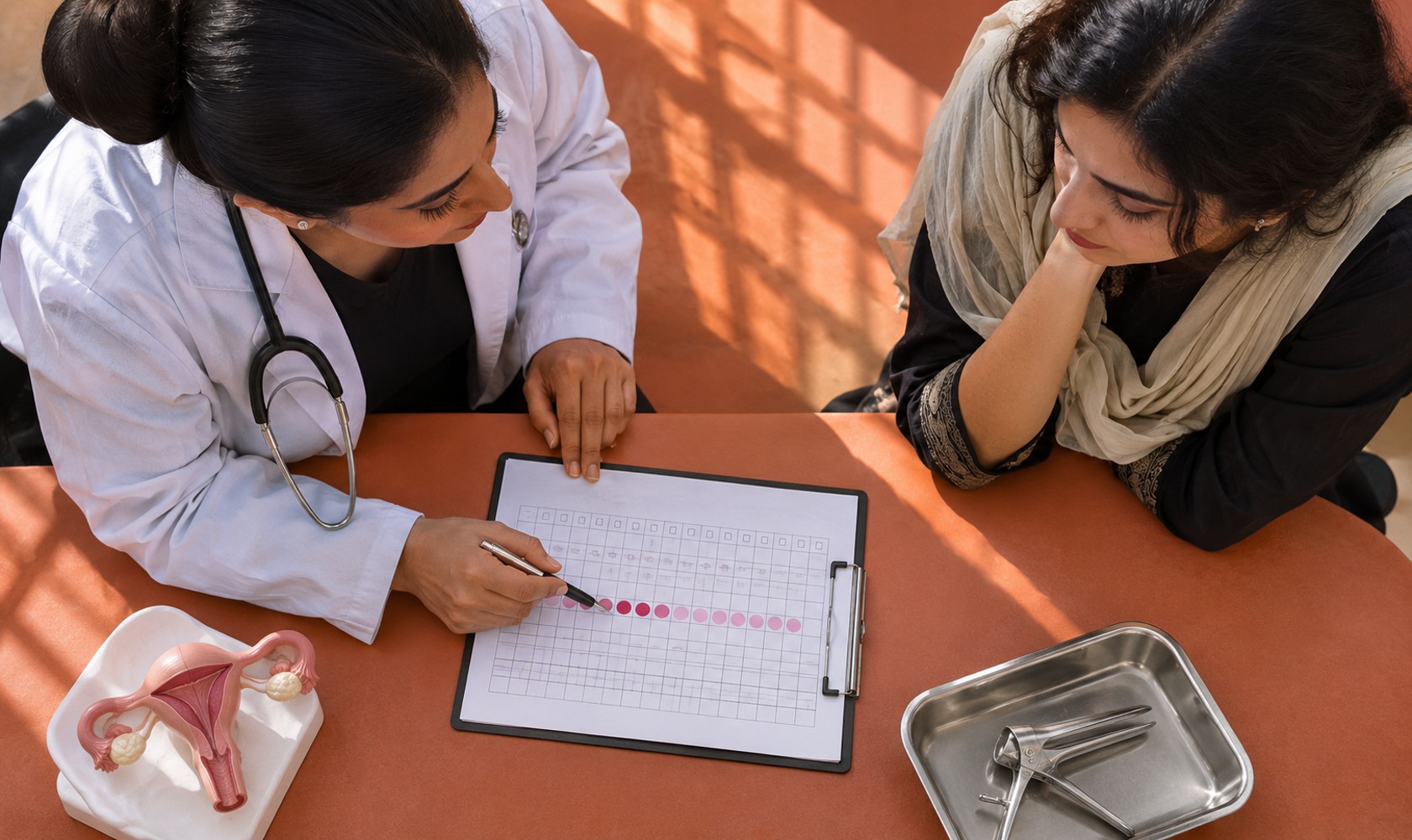 PCOS affects ovulation and androgen activity and often occurs alongside insulin resistance. It can cause infrequent periods, acne or increased facial hair, but no single symptom or ultrasound finding establishes the diagnosis. The name can mislead: ovarian cysts are not required in every patient.
Reasons to seek assessment
- Infrequent, absent or unpredictable periods.
- Persistent acne or increased coarse facial or body hair.
- Difficulty conceiving because ovulation is irregular.
- A previous PCOS diagnosis needing metabolic or treatment review.
Confirming the pattern and treating priorities
We review menstrual history, signs of androgen excess and other possible explanations. Selected blood tests can assess hormones, thyroid function and conditions that resemble PCOS. Ultrasound helps some assessments but does not replace clinical criteria. We also review blood pressure, glucose and cholesterol risks where appropriate.
Treatment follows your goals. Hormonal contraception or intermittent progestin can manage bleeding and protect the uterine lining when periods are infrequent. Acne and unwanted hair may need additional treatment with pregnancy precautions. A sustainable nutrition and activity plan supports metabolic health without making weight loss the only measure of progress.
For pregnancy goals, ovulation treatment and fertility assessment may help; contraception treatment does not serve the same purpose. Follow-up checks menstrual protection, medicine tolerance and metabolic findings. Long gaps without a period deserve a plan rather than indefinite observation.
Telehealth
Your healthcare should be on your schedule. With Bayspring Medical telehealth services, you can connect with your provider from the comfort of home, making it easier than ever to manage your health. From virtual consultations to follow-up visits, our telehealth options provide flexible, convenient access to quality care without the need to travel.
Changes needing prompt review
Rapidly developing voice deepening or marked new hair growth needs timely evaluation for another cause. Severe pelvic pain, pregnancy-related pain or heavy bleeding with faintness needs urgent care.

