

Dry Eye Syndrome
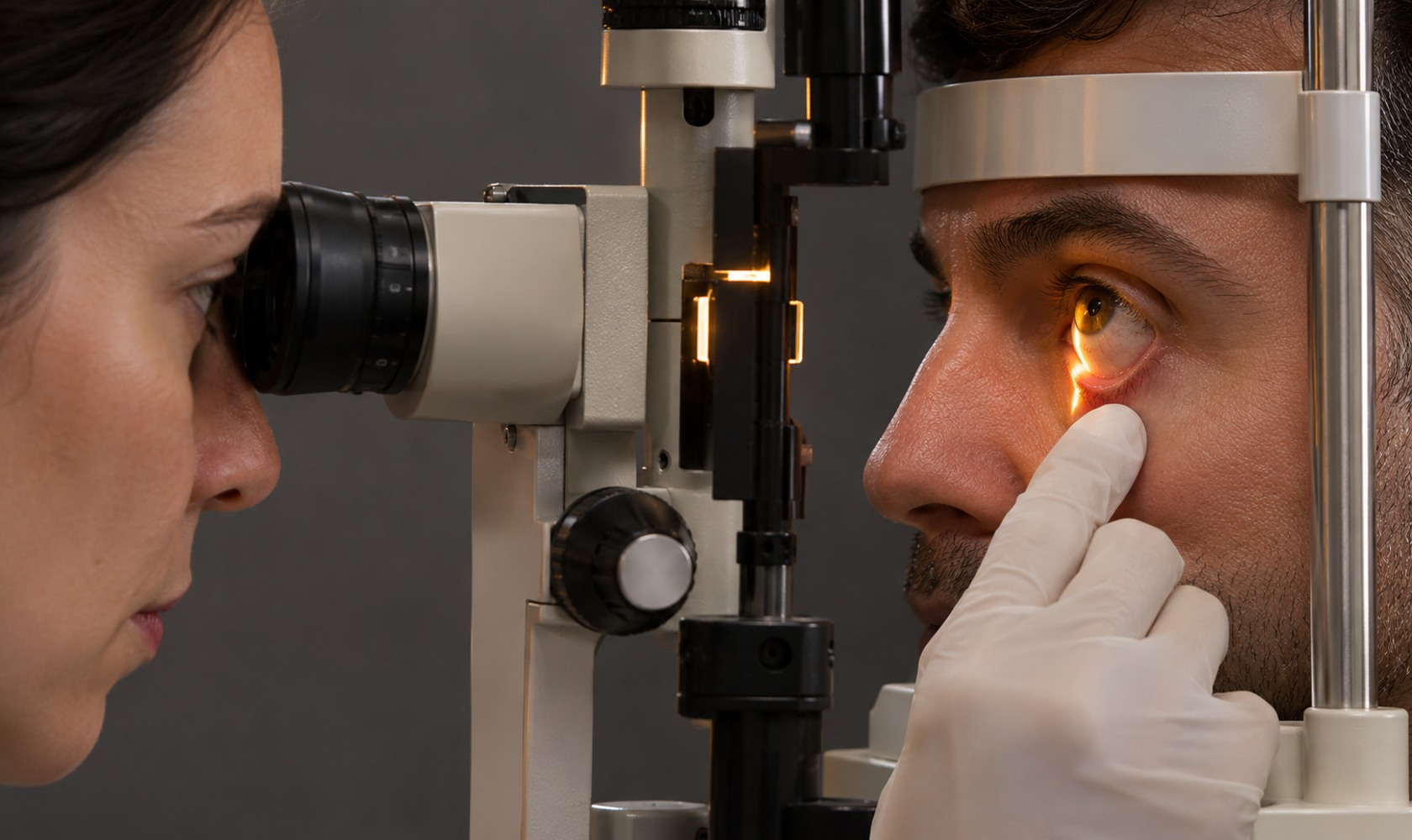 Dry eye develops when the eye makes too few tears or the tear film breaks down too quickly. Eyelid oil-gland dysfunction, medicines, contact lenses, screen habits and some autoimmune conditions can contribute. Paradoxically, irritated dry eyes may water excessively because reflex tears do not provide a stable surface.
Symptoms to discuss
- Burning, grittiness or a feeling of something in the eye.
- Fluctuating blur that briefly improves after blinking.
- Redness or discomfort during screen use.
- Contact-lens intolerance or recurrent eyelid irritation.
Assessing the tear film
We examine the eyelids, tear surface and cornea, often using staining and tear-film measurements. The history can reveal medicine effects or symptoms suggesting an associated condition. Not everyone needs blood tests, and persistent discomfort deserves examination before repeated use of redness-relieving drops.
Treatment can include appropriate artificial tears, eyelid care, changes to contact-lens use and screen breaks that encourage complete blinking. Preservative-free products may suit frequent use. Selected patients need prescription anti-inflammatory drops, treatment of eyelid gland dysfunction or another procedure after assessment.
We explain which measures address your main problem and how long to judge the response. Dry eye often needs ongoing management rather than one short course. Tell the clinician about dry mouth, joint symptoms or previous eye surgery because these details can change the investigation and treatment plan.
Telehealth
Your healthcare should be on your schedule. With Bayspring Medical telehealth services, you can connect with your provider from the comfort of home, making it easier than ever to manage your health. From virtual consultations to follow-up visits, our telehealth options provide flexible, convenient access to quality care without the need to travel.
Symptoms that should not wait
Significant eye pain, light sensitivity or a sudden reduction in vision needs urgent assessment. A painful red eye in a contact-lens wearer also requires prompt examination for possible corneal infection.

