

Glaucoma
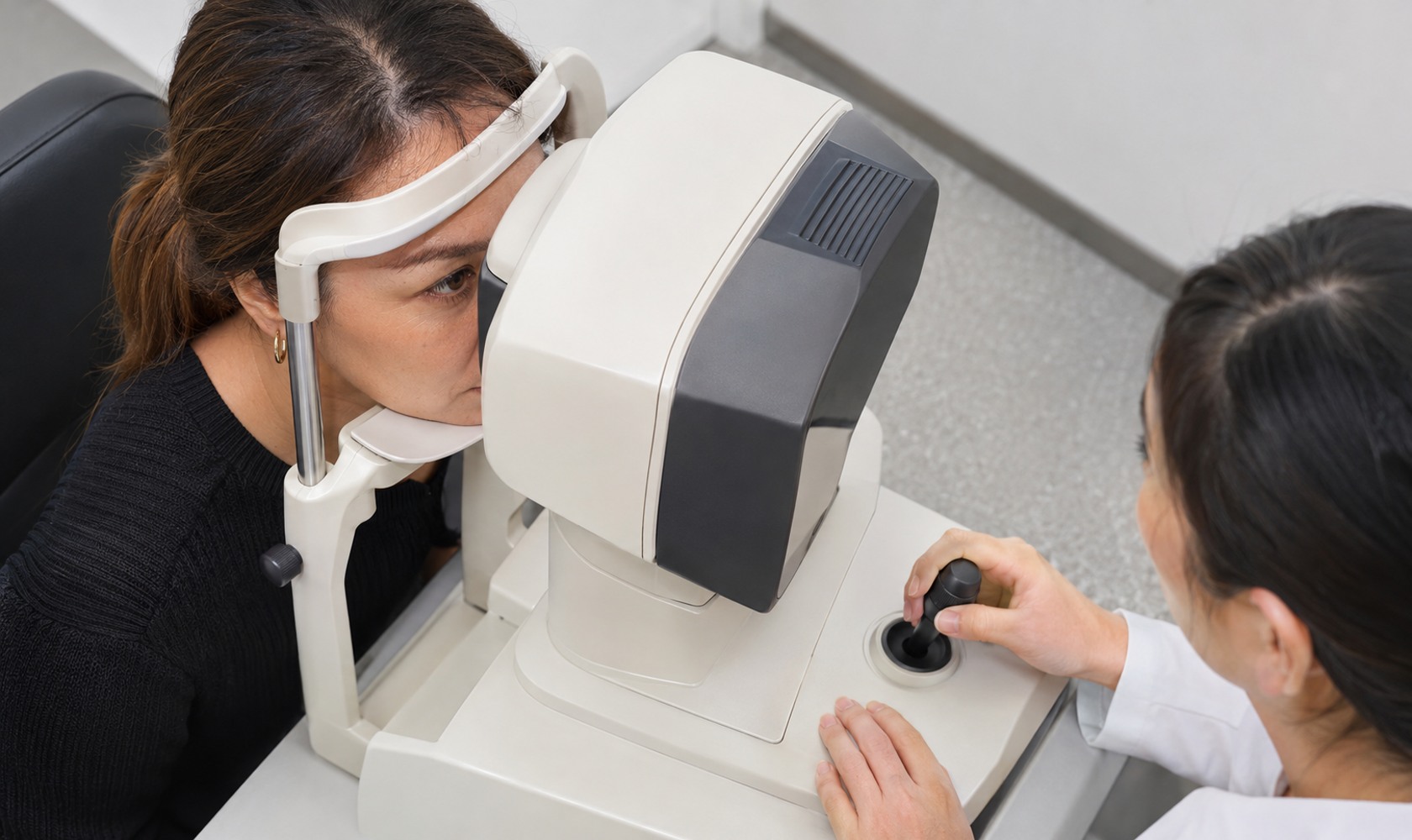 Glaucoma damages the optic nerve and can gradually reduce peripheral vision. Raised eye pressure is a major risk factor, but damage can occur at pressures within the usual range. Early open-angle glaucoma often causes no symptoms, so screening and follow-up depend on risk and examination findings.
Who needs assessment or monitoring
- People with a family history of glaucoma.
- Patients with elevated eye pressure or suspicious optic-nerve findings.
- Anyone with a previous diagnosis needing treatment review.
- People noticing side-vision difficulty or problems tolerating eye drops.
Checking for damage and progression
We assess eye pressure, optic-nerve appearance and relevant anatomy. Visual-field testing measures functional changes, while optic-nerve imaging helps track structure over time. Corneal thickness and examination of the drainage angle can add information; a pressure reading alone cannot establish or exclude glaucoma.
Treatment aims to slow or prevent further loss, because existing nerve damage usually cannot be reversed. Eye drops, laser treatment or surgery may lower pressure, depending on disease type, severity and preferences. We review technique, adherence and systemic side effects when prescribing drops.
Repeated measurements matter because progression can occur without noticeable symptoms. Bring previous fields, scans and medication details if you transfer care. A normal-feeling eye does not mean it is safe to stop treatment, and the pressure target may change as the clinician reviews the whole pattern.
Telehealth
Your healthcare should be on your schedule. With Bayspring Medical telehealth services, you can connect with your provider from the comfort of home, making it easier than ever to manage your health. From virtual consultations to follow-up visits, our telehealth options provide flexible, convenient access to quality care without the need to travel.
Acute glaucoma symptoms are an emergency
Severe eye pain, redness, blurred vision or halos with headache, nausea or vomiting can indicate acute angle closure. Seek immediate emergency eye care rather than waiting for a routine pressure check.

