

ADHD & Behavioral Screenings
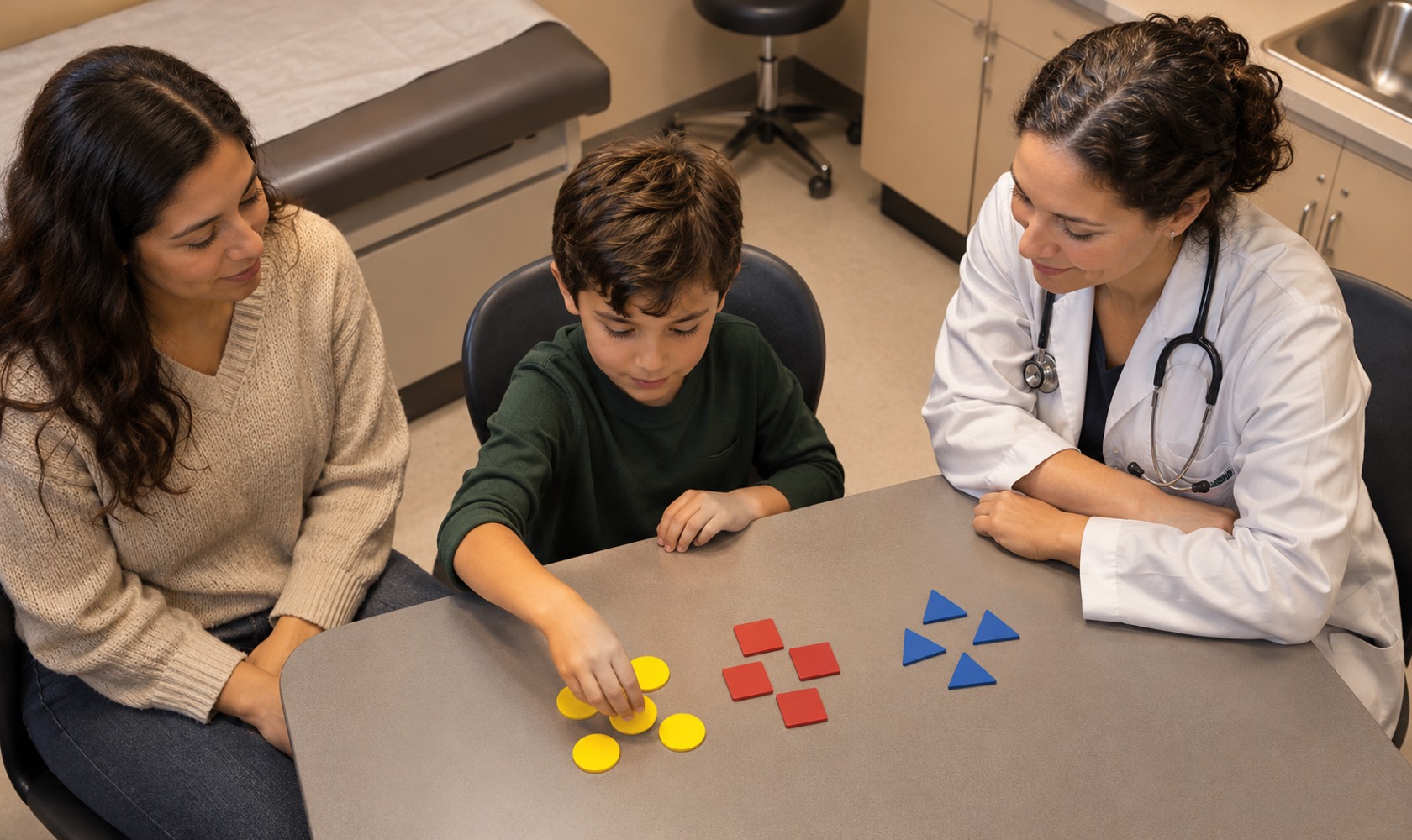 ADHD affects attention, impulse control or activity in ways that impair function across settings. Sleep problems, anxiety, learning difficulties, hearing or vision concerns can produce similar behaviors or coexist. A questionnaire can organize information, but no single test or brief office observation establishes the diagnosis.
Reasons for a developmental or behavioral review
- Persistent attention or impulsivity concerns at home and school.
- Difficulty completing age-appropriate tasks despite support.
- Behavior that affects learning, friendships or family routines.
- A teacher or caregiver reporting a sustained change or concern.
Gathering information from more than one setting
We review development, sleep, medical history, emotional health and school experience. Parent and teacher rating scales help describe the pattern and impact. Hearing, vision or learning assessment may clarify contributing problems; brain imaging and routine broad laboratory panels do not diagnose ADHD.
Treatment follows age, needs and the confirmed diagnosis. Options can include caregiver behavior training, classroom support, skill-building and medicines when appropriate. The clinician explains the purpose of treatment, possible adverse effects and monitoring of growth, appetite, sleep, pulse and blood pressure when relevant.
We agree on observable goals such as completing work or reducing unsafe impulsive behavior. Follow-up uses caregiver, child and school feedback rather than a prescription renewal alone. Bring reports and examples of difficulties, including situations in which the child functions well.
Telehealth
Your healthcare should be on your schedule. With Bayspring Medical telehealth services, you can connect with your provider from the comfort of home, making it easier than ever to manage your health. From virtual consultations to follow-up visits, our telehealth options provide flexible, convenient access to quality care without the need to travel.
Changes needing urgent assessment
Sudden major behavior change, confusion, new neurological symptoms or immediate risk of harm needs urgent medical or mental health assessment. A child who cannot remain safe requires emergency help.

