

Dehydration & IV Hydration Therapy
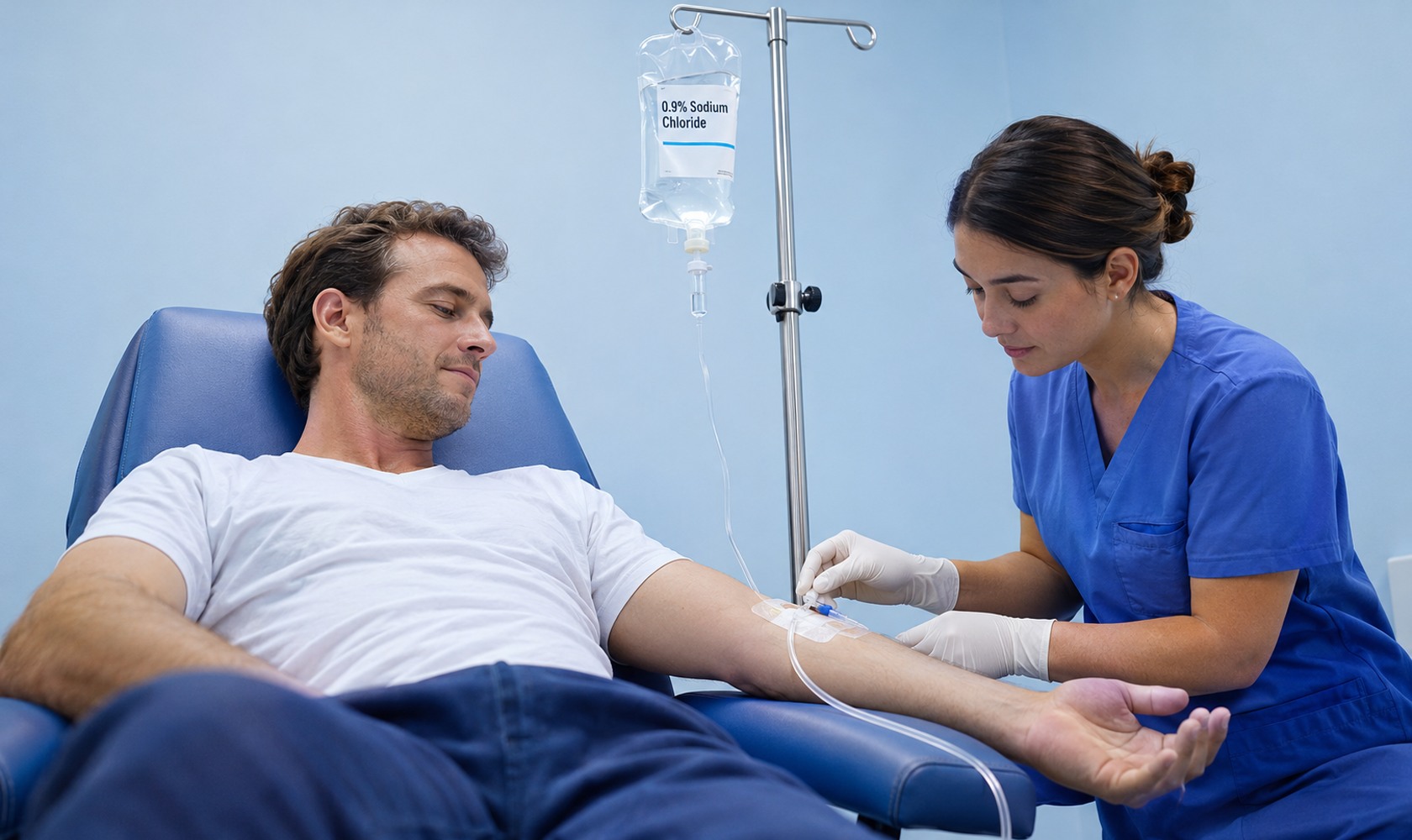 Dehydration occurs when fluid loss exceeds intake, often after vomiting, diarrhea, fever or heat exposure. It can disturb circulation and electrolyte balance. An IV is one treatment route for selected patients, not a routine cure for tiredness or a substitute for investigating the cause.
Signs we evaluate
- Thirst, dry mouth or darker and less frequent urine.
- Dizziness on standing or an unusually fast pulse.
- Repeated vomiting that prevents adequate drinking.
- Ongoing fluid losses in someone older or taking certain medicines.
Assessment before fluids
We review the duration of illness, fluid losses, urine output and relevant heart or kidney conditions. Pulse, blood pressure and examination help estimate severity. Blood tests may assess electrolytes, kidney function or glucose when symptoms or medical history raise concern.
For mild or moderate dehydration, oral rehydration solution often replaces water and salts effectively. Small frequent amounts can suit someone who feels nauseated. The clinician may consider IV fluids when oral intake cannot meet the need and the clinical setting can provide safe monitoring.
Fluid type and amount depend on the cause and health history. Excess fluid can harm people with heart or kidney disease, so treatment requires reassessment rather than a standard infusion for everyone. We also address vomiting, medication effects or another illness that caused the dehydration and explain how to continue recovery at home.
Telehealth
Your healthcare should be on your schedule. With Bayspring Medical telehealth services, you can connect with your provider from the comfort of home, making it easier than ever to manage your health. From virtual consultations to follow-up visits, our telehealth options provide flexible, convenient access to quality care without the need to travel.
When dehydration becomes an emergency
Confusion, collapse, very little urine, severe weakness or signs of shock requires emergency care. Heat exposure with altered awareness may indicate heat stroke and needs immediate emergency treatment.

