

Kidney Stones
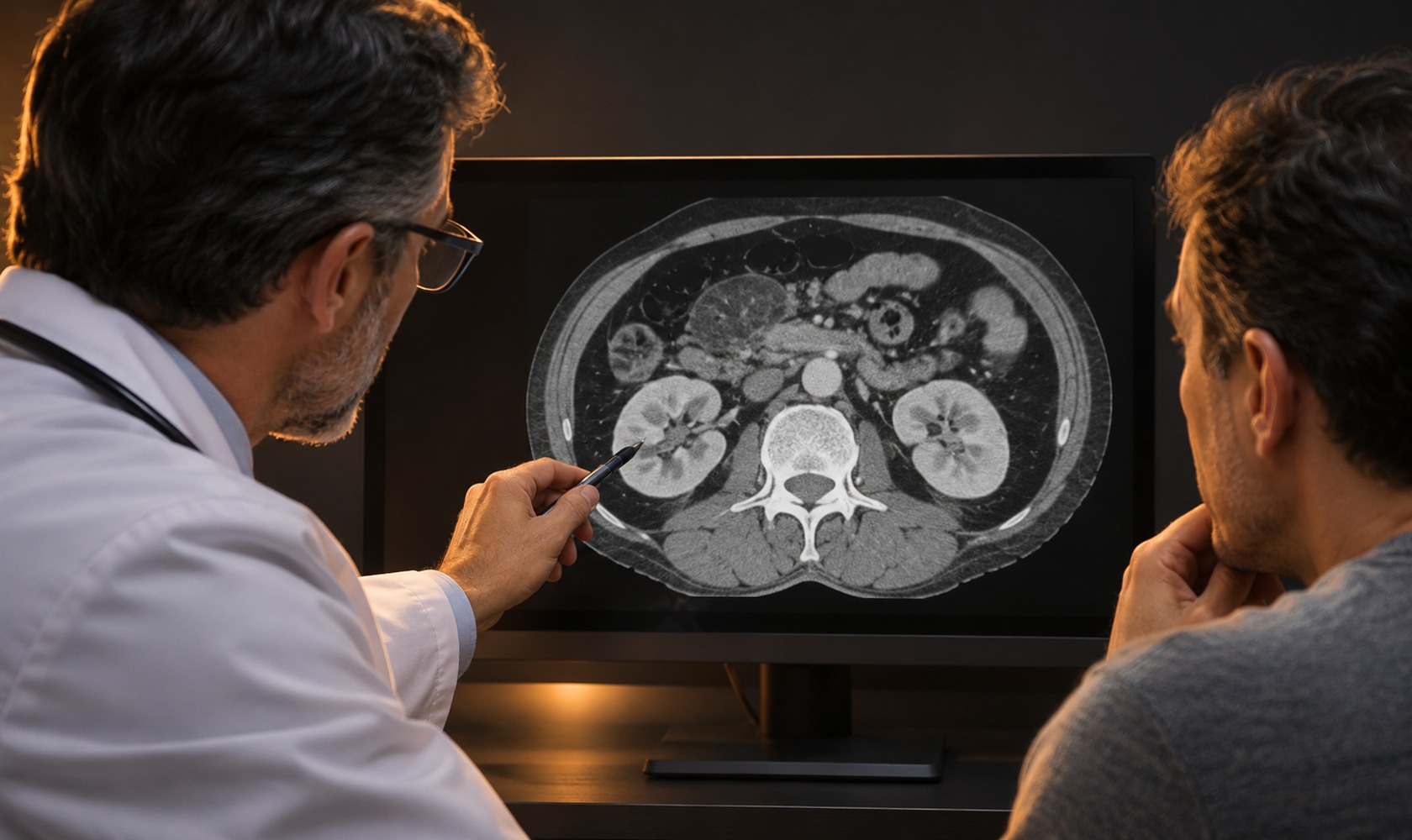 Kidney stones form when minerals or other substances crystallize in urine. A stone can remain silent in the kidney or cause severe pain when it moves and obstructs a ureter. Low urine volume, diet, metabolic conditions and family history can influence risk, but prevention depends partly on stone type.
Reasons for evaluation or follow-up
- Flank pain traveling toward the groin.
- Blood in the urine or recurrent stone episodes.
- A scan showing a stone that needs a management plan.
- Questions about preventing recurrence after an acute attack.
Locating the stone and protecting kidney function
We assess pain, fever, hydration and urine output. Urine and blood tests can check infection, kidney function and selected stone-related factors. Ultrasound or CT can establish size, location and obstruction; the imaging choice considers circumstances such as pregnancy and prior radiation exposure.
Some small stones pass with pain control, appropriate fluids and selected medicine. Larger stones, ongoing obstruction or uncontrolled symptoms may need a procedure such as ureteroscopy or shock-wave treatment through a urology service. An infected obstructed kidney requires urgent drainage, not observation at home.
When possible, stone analysis and selected urine studies guide prevention. Advice may address fluid intake, sodium, normal dietary calcium and specific metabolic findings rather than a universal low-calcium diet. Follow-up confirms passage or resolution of obstruction when appropriate; pain disappearing alone does not always prove clearance.
Telehealth
Your healthcare should be on your schedule. With Bayspring Medical telehealth services, you can connect with your provider from the comfort of home, making it easier than ever to manage your health. From virtual consultations to follow-up visits, our telehealth options provide flexible, convenient access to quality care without the need to travel.
Red flags during a stone episode
Fever, chills, inability to pass urine, persistent vomiting or uncontrolled pain requires urgent assessment. A suspected stone in someone with one functioning kidney needs a lower threshold for prompt evaluation.

